
Authentic Konkan Aamras — and Three Traditional Mango Sweets
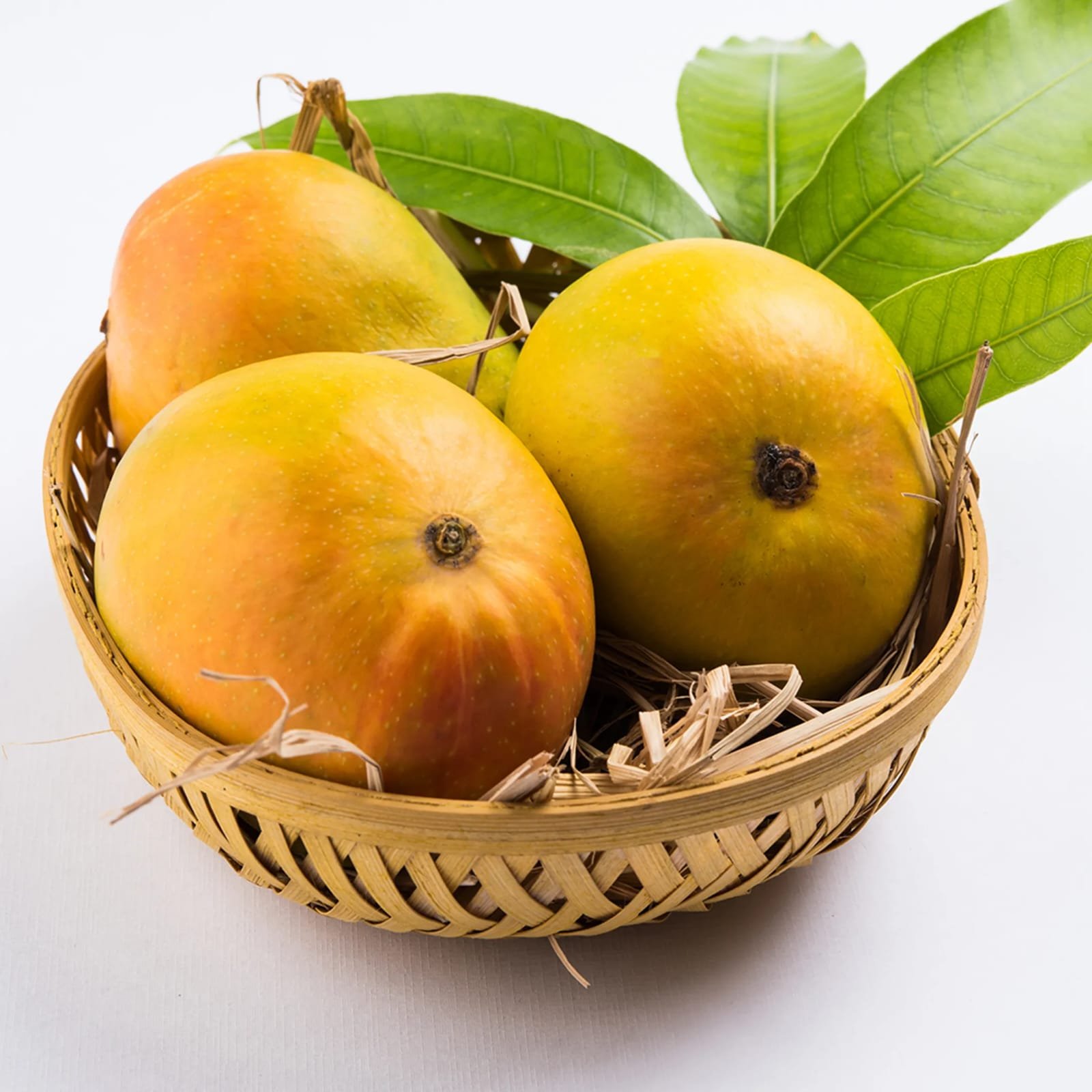
Good Alphonso needs almost nothing done to it — the whole art of Konkan aamras is knowing what to leave out. Here is how our family makes ras, and three older preparations that turn soft, over-ripe fruit into the best sweets of the season.
What aamras really is in a Maharashtrian kitchen
In our village, aamras — mango juice, though "juice" undersells something this thick — is a technique rather than a recipe. Ripe Hapus is squeezed by hand into a broad steel parat, seasoned with a pinch of something warm, and eaten the same hour: no cream, usually no milk, and with fruit from a good orchard often no sugar at all.
The Gujarati ras most people outside Maharashtra have eaten is a different dish — thinner, loosened with milk, sweetened more generously, poured rather than spooned. Konkan aamras sits closer to the fruit: spoon-thick, deep saffron, fragrant enough that you know from the next room someone has cut mangoes.
Seasoning is where families argue. Ours adds a pinch of sunth (dry ginger powder) and one of velchi (green cardamom), saffron on a festival day, and a teaspoon of hot ghee at the end. The sunth is not decoration: mango is considered heating and heavy, and dry ginger settles the stomach after three vatis with poori. Salt is the quiet trick — a few grains sharpen the sweetness considerably.
Konkan aamras is not a smoothie. If it pours in a thin stream from the ladle, it has been thinned too far. It should fall off the spoon in a soft, slow fold.
Aamras: the recipe we actually use
Serves 4 (about one generous vati each) — Prep 20 minutes — No cooking
- 6 to 7 fully ripe Alphonso, medium, roughly 1.4 to 1.6 kg — about 750 to 900 ml of pulp
- Sugar, powdered — 1 to 2 tbsp, only if the fruit needs it
- 1/4 tsp green cardamom, freshly crushed from 3 to 4 pods
- A pinch of sunth (dry ginger powder), 1/8 tsp at most
- 2 pinches of salt
- 1 tsp ghee, warmed
- 8 to 10 saffron threads soaked in 1 tbsp warm milk, optional
- Milk, 2 to 4 tbsp, only to adjust thickness
- Chill the fruit two hours before you start, no longer — days in the fridge cost aroma, as our note on refrigerating mangoes explains.
- Wash, wipe and roll each mango firmly under your palm for ten to fifteen seconds, until the flesh feels loose through the skin. This is what makes hand-squeezing possible.
- Nip off the stem end with your thumbnail and squeeze the pulp into a wide vessel, working from the base up like a tube of paste. Peel back the skin and scrape it clean with a spoon.
- Work the koy (stone). Squeeze it in your fist, then scrape both faces — another two to three tablespoons per mango, close to half a kilo over a peti.
- Mash by hand. Press the pulp against the side of the vessel with your fingers, or use a wooden ravi, for two or three minutes until smooth.
- Taste before you sweeten. With ripe Ratnagiri Hapus you usually stop here; for an under-ripe batch add powdered sugar a spoon at a time, letting each dissolve.
- Season in order: salt, cardamom, sunth, saffron milk, and the warm ghee last. Adjust thickness with a spoon of chilled milk only if you must.
- Rest 15 minutes in the coolest corner of the kitchen. Aamras is at its best within two hours of squeezing.
Hand-squeeze versus mixer: why it matters
A mixer gives you ras in forty seconds and it does not taste the same. The blades whip in air, which pales the colour to a foamy yellow and sets the aroma oxidising; friction warms the pulp, and warm mango smells cooked; and fibre from near the stone is shredded into a fine suspension, giving that gluey body you meet in restaurant ras. Cooking for twenty at a ras-poori lunch, use the mixer by all means — but pulse it three or four times and stop while flecks of fruit are visible.
Set aside a katori of the first unseasoned pulp. That is your reference: if the finished ras does not smell as good as that katori, you have added too much.
What to eat it with
The classic pairing is hot poori, torn and dipped rather than drowned. More common on an ordinary Konkan day is ghavan, a thin slightly fermented rice-flour crepe cooked on one side — plain rice taste is a better foil for Hapus than wheat. Chapati with ghee works, and in Malvan steamed rice with ras and a spoon of ghee is a whole meal. At Ganpati, when ukdiche modak (steamed rice-flour dumplings with coconut and jaggery) are made, ras from frozen pulp often appears in the same sitting; the mango cuts the richness of the coconut filling.
Which fruit for which preparation
The softest fruit in a peti is not a loss. A mango a day past perfect has more sugar, more aroma and pulp that leaves the stone cleanly — the best fruit in the box for ras and vadi, not the worst.
| Preparation | Ideal ripeness | Why |
|---|---|---|
| Slices, fruit salad | Just ripe; firm shoulder with slight give | Holds its shape, clean edges, no weeping |
| Aamras | Fully ripe to a day over-ripe; soft all over | Most aroma, releases by hand, little or no sugar needed |
| Aamrakhand | Fully ripe, sweet, low fibre | Curd mutes flavour, so fruit must be at its peak |
| Aambya vadi / poli | Very ripe, even slightly wrinkled | More sugar dries faster, sets firmer, colours deeper |
| Mango sasav | Ripe and tangy; fibrous varieties welcome | Acidity balances coconut and jaggery |
| Kulfi, ice cream | Fully ripe, thick pulp | Watery pulp freezes into ice crystals |
Variety matters as much as ripeness. Alphonso gives aroma and colour; Payri, tangier and juicier, is what Konkan households traditionally used for sasav and for cutting a very sweet ras — see Alphonso vs Kesar vs Payri vs Badami.
Aamrakhand (mango shrikhand)
Serves 5 to 6 — Active time 25 minutes — Hanging time 5 to 6 hours
- 1 kg full-fat curd, thick and not sour — gives roughly 400 to 450 g chakka (hung curd)
- 300 g thick Alphonso pulp, about 2 large fruit
- 100 to 125 g powdered sugar, to taste
- 1/2 tsp green cardamom powder
- 10 to 12 saffron threads in 1 tbsp warm milk
- 2 tbsp slivered pistachio and almond
- Hang the curd in double muslin over a bowl, five to six hours in a cool place or overnight in the fridge. Do not squeeze the cloth; pressed chakka turns grainy.
- Sieve the chakka with the back of a ladle — this one step is the difference between silky aamrakhand and lumpy.
- Beat in the powdered sugar for three to four minutes until fully dissolved. Granular sugar will not dissolve in cold chakka.
- Fold in the pulp gently. Fold, do not beat, or it loosens and will not hold its shape.
- Add saffron milk and cardamom and taste; it reads less sweet chilled.
- Chill at least 3 hours and serve cold with nuts scattered over, alongside hot poori.
Aamrakhand does not keep like plain shrikhand — the fruit ferments with the curd and by day three it turns sour. Make only what you will finish in two days.
Aambya vadi (the sun-dried mango slab)
This is what carries the season into December: thin layers of cooked pulp dried in the April sun, one over the other, into a dense chewy slab the colour of old amber. Thin sheets are aamba poli; the thick slab cut into diamonds is aambya vadi.
Makes about 400 to 500 g — Active time 45 minutes — Drying 4 to 6 days of strong sun
- 2 kg thick pulp from very ripe Alphonso, 14 to 16 fruit
- 150 to 200 g sugar — older households used none; start at the lower end
- 1/2 tsp cardamom powder
- 2 tsp ghee for greasing
- A large flat thali and clean muslin to cover
- Sieve the pulp. Fibre dries hard and ruins the texture.
- Cook it in a heavy kadhai on a low flame, stirring often, 20 to 25 minutes, until it darkens to a soft dropping consistency. Add sugar only once it thickens, or it will catch.
- Stir in cardamom and cool completely.
- Grease a thali lightly and spread the first layer no thicker than 3 mm. Thin layers dry; thick layers ferment.
- Dry in direct sun under muslin for one full day, and bring it in before the evening dew without fail.
- Spread the next layer over the dried one next morning and repeat. Four to six layers make a good vadi.
- When the last layer is leather-dry, peel the sheet off the thali, cut into diamonds with a greased knife and store between butter paper in an airtight steel dabba.
No reliable sun? Set the oven to its lowest setting, 60 to 70 degrees, prop the door open with a wooden spoon and dry each layer two to three hours. Not identical, but far better than losing the pulp.
Aambyache sasav (mango, coconut and mustard)
The one savoury dish here, and the least known outside the coast. Sasav takes its name from sasam, mustard: ripe mango in a raw ground coconut-and-mustard sauce, eaten with hot rice, served at weddings and at Ganpati across Malvan and the coastal GSB kitchens.
Serves 4 — Prep 15 minutes — No cooking required
- 4 small ripe mangoes, peeled and left whole on the stone, or 2 Alphonso in thick pieces plus 1 vati pulp
- 1 vati fresh grated coconut, about 100 g
- 1 tsp mustard seeds, half for grinding and half for tempering
- 1 to 2 green chillies, or 2 dry Kashmiri for colour
- 1 tbsp grated jaggery, more if the fruit is tart
- Salt to taste
- 1 tsp coconut oil and 6 to 8 curry leaves, for the optional tempering
- Grind the coconut, half the mustard and the chillies with 3 to 4 tbsp water to a fine paste, keeping the grinding brief — long grinding turns mustard bitter.
- Loosen with about half a cup of water to a thick pouring consistency, then mix in jaggery and salt until dissolved.
- Add the mango — whole peeled fruit with stones traditionally, pieces and pulp otherwise — and turn gently to coat.
- Temper if you like: crackle the remaining mustard in hot coconut oil, add curry leaves, pour over. Many families skip this and serve it raw.
- Rest 20 minutes and serve at room temperature with rice. It does not keep beyond a day.
Using frozen pulp out of season
Every May our kitchen fills with vessels of pulp bound for the freezer, because from July onwards this is the only honest Alphonso going.
- Freeze it plain — no sugar, no milk, no water. Season at serving, never before freezing.
- Pack meal-size portions — 250 ml boxes or flat zip pouches — filled almost to the brim, since trapped air makes ice crystals and dulls flavour.
- Thaw slowly in the fridge overnight, never in the microwave or warm water; both cook the surface.
- Expect a thinner ras. Pulp separates a little on thawing; stir it back and add an extra pinch of cardamom, as aroma is the first thing the freezer takes.
- Use it well: excellent for aamrakhand, kulfi and vadi, merely good for plain ras.
Well-packed pulp holds its character eight to ten months in a deep freezer. If your fruit is still on the counter and not yet soft enough to squeeze, our home ripening guide covers the last days of the wait.
My aaji, my father's mother, judged a batch of ras by smell alone, from the doorway, before she had tasted a spoon. If it did not reach her there, she said, no amount of sugar would fix it.
Frequently Asked Questions
Should I add sugar to aamras made with good Alphonso?
Usually not. Ripe Ratnagiri Hapus is sweet enough on its own and sugar flattens the aroma. Taste the plain pulp first; to sweeten an under-ripe batch, use powdered sugar so it dissolves without beating.
Milk or water in aamras — which is correct?
Neither is required in the Konkan style. If the pulp is too thick to spoon, two to four tablespoons of chilled milk for four servings is fine; water thins the taste along with the texture. The milk-heavy version is Gujarati — a different dish, not a wrong one.
Can I make aamras a day ahead?
You can, but it loses noticeably. Keep it in a steel vessel with cling film pressed onto the surface, and add ghee and cardamom only at serving. Beyond a day it darkens and turns faintly sour.
Is aamras safe for someone watching their sugar intake?
A vati of unsweetened ras is concentrated fruit — roughly a mango and a half — so portion is everything. Skip the sugar, keep to half a vati, and eat it with a meal rather than alone. Our piece on Alphonso nutrition goes further, and anyone managing diabetes should follow their doctor's advice over ours.
My mangoes are fibrous. Are they wasted for these recipes?
Not at all. Sieve the pulp for aamras, aamrakhand and vadi and the fibre is gone. In sasav fibre is expected, since the small whole fruit is traditionally sucked off the stone.
Order Konkan Alphonso direct from the orchard
Hand-picked, naturally ripened in hay, and packed the day they leave the tree. Message us on WhatsApp for this season's availability and prices.