
Should You Refrigerate Mangoes? The Complete Storage Guide
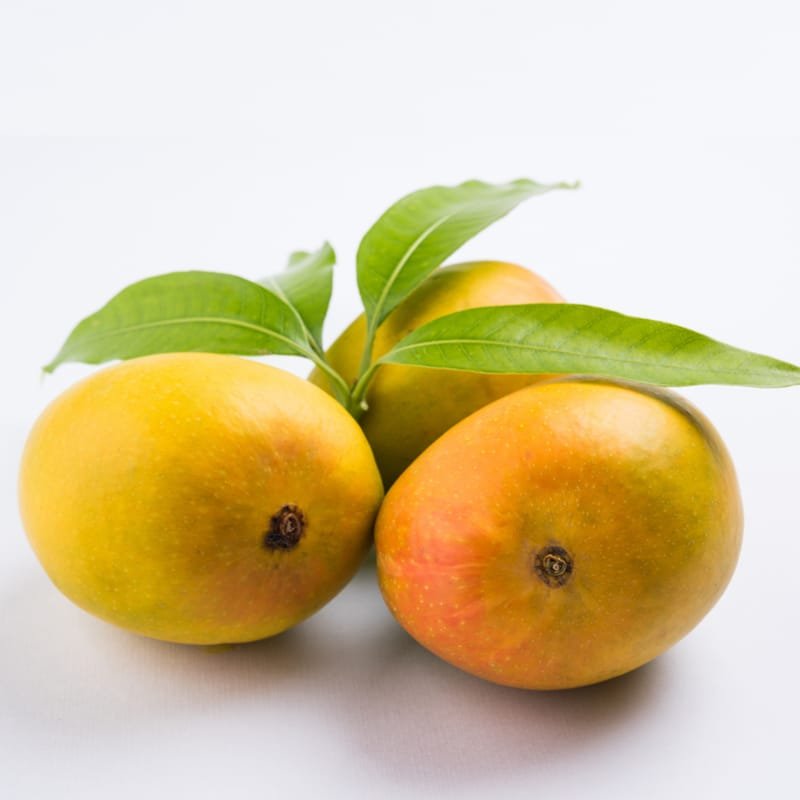
More Alphonso is spoiled by the refrigerator than by any lorry, any delay or any heat wave. A mango chilled at the wrong moment does not merely keep badly — it loses the ability to ripen at all, and no amount of time on the counter afterwards will bring it back.
The short answer
Never refrigerate an unripe mango. Not for an hour, not overnight, not "just to keep it safe while we are travelling". A hard green Hapus belongs in a cool, dark, airy room and nowhere else.
Refrigerate a fully ripe mango only, and only briefly — three to four days at most, in the vegetable drawer, once the fruit is soft at the shoulder and fragrant at the stem. At that stage chilling buys you time, which is what you want when a dozen mangoes come ripe on the same afternoon. Before that stage, it does permanent damage.
The rule that covers nearly every case: ripen on the counter, chill only after ripening, eat within a few days.
What chilling injury actually is
Mango is a tropical fruit whose cells have none of the defences an apple or a grape has. Below roughly 10 to 13 °C — and a domestic Indian fridge usually runs at 4 to 6 °C — the cell membranes in the peel and outer flesh start breaking down. Horticulturists call this chilling injury, and the important word is injury, not delay.
Three things go wrong together. The skin develops pitting, small sunken dimples that spread into dull grey-brown patches, so the fruit looks bruised without ever having been dropped. The enzymes that turn starch into sugar and build aroma are knocked out, so the flesh may soften slightly but will never smell like Alphonso — it goes bland and faintly turnip-like. And the ripening programme stalls permanently: take the fruit out, leave it a week, and it sits there stony in the middle, then rots from the stem.
The damage starts within hours and accumulates. One night in the fridge and a raw mango often ripens lopsided, soft on one cheek and hard on the other; two or three nights and it is finished. This is also why we never send fruit by refrigerated transport, as we explain in our note on how mangoes travel across India.
How to tell a mango has been chill-damaged
- Dull, lifeless skin with a greyish cast instead of a waxy bloom, blotched brown in patches that do not follow the shape of a bruise.
- Sunken pitting near the nose of the fruit, felt with a fingertip before it is seen.
- Softness without smell. The giveaway. A true ripe Alphonso announces itself across the room; chilled fruit yields to the thumb but the stem end smells of nothing.
- Pale, grey-streaked flesh near the skin, watery rather than dense and buttery.
- Ripening that has stopped. Five days on the counter with no change is not patience being tested.
Such fruit is not unsafe, only disappointing. Use it in a sweetened aamras or a milkshake where sugar and cardamom can carry it.
Correct storage at each stage
Raw and mature-green
This is how farm-direct fruit arrives, and it should come out of the courier packaging within the hour. Lay the mangoes in a single layer on cloth or newspaper in the coolest, darkest, airiest corner of the house — a store room floor, under a cot, a shaded balcony. Stems up, fruit not touching. Never seal them in plastic: a mango breathes, and trapped moisture on the skin becomes black rot in two days.
Ripening
After a day's rest, pack the fruit in a carton with dry grass, paddy straw or crumpled newspaper and close the lid loosely. The carton holds the fruit's own ethylene around it, so the mangoes ripen each other evenly and without chemicals. Open the box each morning and remove whatever is ready; our day-by-day guide to ripening Alphonso at home covers the readiness tests.
Just-ripe
Soft at the shoulder, deep gold, fragrant at the stem; best eaten within a day or two at room temperature. If more has ripened than you can finish, now — and only now — the fridge helps: whole fruit, unwrapped or in a paper bag, in the vegetable drawer, three to four days. Bring each mango out two hours before eating, because Hapus served straight from the fridge tastes like half the mango it is.
Cut fruit
Cut flesh is sugary and exposed and ferments fast, so refrigeration is correct here: an airtight steel or glass box, pieces packed snugly, on an upper shelf rather than the coldest back corner. Eat within twenty-four hours, never leave the pieces sitting in their own juice, and never leave cut mango on the counter through a Mumbai afternoon.
Overripe
Wrinkled at the stem, soft all over, aroma turning sharp. Do not try to save it whole and do not throw it out. Pulp it the same day and freeze.
| Stage | How it looks and feels | Correct storage | Keeping time |
|---|---|---|---|
| Raw / mature-green | Hard, heavy, dull green, dusty bloom | Single layer, cool dark airy room, never sealed, never chilled | 4–8 days before ripening starts |
| Ripening | Colour breaking at the shoulder, faint aroma | Carton with hay, straw or paper, lid loosely closed, room temperature | 3–6 days depending on city and month |
| Just-ripe | Golden, gives to gentle thumb pressure, strong stem aroma | Room temperature; or vegetable drawer for a short hold | 1–2 days on the counter, 3–4 days chilled |
| Cut | Sliced, cubed or peeled | Airtight box, upper fridge shelf, no free liquid | 24 hours, 48 at the outside |
| Overripe | Wrinkled stem, soft all over, sharp aroma | Pulp and freeze the same day | 8–10 months frozen |
If you have cut more than you can eat, do not refrigerate the surplus — pulp and freeze it straight away. Frozen pulp keeps its flavour far better than day-old cut fruit.
Freezing Alphonso pulp for the off-season
Every household in our village freezes pulp in May and eats aamras in December. The method matters.
- Use fully ripe or slightly past-ripe fruit, never under-ripe. Freezing fixes flavour where it is; it does not improve it.
- Peel and squeeze the pulp by hand. Do not run the mixer long at high speed — the blades whip in air and warm the pulp, dulling the aroma.
- Add nothing. No sugar, water, milk or preservative; those go in on the day you serve.
- Fill pouches to about ninety per cent, press the air out flat, and label with the date. Portion by meal — 400 to 500 g feeds a family of four — because pulp thawed and refrozen turns grey and sour.
- Freeze flat and fast in the coldest part of the freezer, then stack once solid.
Thaw overnight in the fridge, never in hot water or the microwave, then whisk with milk, jaggery or sugar and a pinch of elaichi. Our Konkan aamras recipe works as well with frozen pulp as with fresh.
Handling a full 24 or 48 peti
The commonest complaint we hear is not about the fruit at all: "everything ripened on Thursday". A whole peti peaking on one day is a storage decision, not bad luck. Unpack on arrival and sort by feel into three groups. The heaviest, hardest, greenest fruit goes into the cool room in a single layer with no straw — those are your week-two mangoes. The middle group goes back into the carton with straw, lid loose. The few showing colour break go on a plate for immediate eating. Re-sort every morning, moving five or six from the cool store into the ripening carton. In a Pune or Bengaluru flat this stretches a 48-count peti over twelve to fourteen days instead of four.
Two habits help. Keep cool-store fruit away from bananas, apples and tomatoes, which give off ethylene and hurry your mangoes along; and check daily for one fruit going soft in the middle of a layer, because a single leaking mango takes its neighbours with it overnight.
Indian kitchens: adapting to your city
A room at 35 to 40 °C is a fast ripening chamber, and most of us have no air-conditioning in the kitchen. The aim is not cold; it is cooler and steady, with air moving.
Coastal and humid — Mumbai, Konkan, Chennai, Kolkata. Humidity, not heat, is the enemy, and fungus and stem rot arrive fast. Use more ventilation and less covering: prop the carton lid open a finger's width, use newspaper rather than thick straw, and keep the fruit off a stone floor that sweats. A ceiling fan on low does more good than any container.
Dry heat — Delhi, Jaipur, Ahmedabad, Nagpur. Here fruit shrivels at the stem before the flesh is ready. Keep the carton closed, add extra straw or paper, and set a damp cloth beside — not on — the fruit. A wooden crate in an inner room beats a metal almirah, which heats through the day.
Cooler stations — Shimla, Ooty, Shillong. Ripening simply takes longer. Keep the carton in the warmest room and add two or three days to every estimate.
In any flat the coolest spot is usually the floor of an interior room away from the west wall; the worst is a sunlit windowsill.
Spoilage, or just a cosmetic mark?
Farm-direct fruit is not cosmetically graded the way supermarket fruit is, so marks are normal. Knowing which ones matter saves good mangoes from the bin.
Harmless
- Sap burn and latex marks. Thin dark streaks radiating from the stem where sap ran at harvest — skin-deep, with sound flesh beneath.
- Lenticel spotting. Fine dark freckles across the skin, the fruit's breathing pores, clearer on some trees than others.
- Russeting and a dusty white bloom — both signs of unwashed, untreated fruit, and welcome ones. See our guide to spotting genuine Ratnagiri Alphonso.
- Uneven colour, which only shows which cheek faced the sun.
Real problems
- Spongy tissue. White or grey mealy flesh with air pockets near the stone, faintly fermented in smell, inside fruit that looks perfect outside. A heat-related field disorder; do not eat that portion.
- Black stem-end rot. A soft blackened ring spreading down from the stalk, wet and sour-smelling. Remove that fruit at once; it spreads.
- Weeping fruit, white fuzz, or an alcoholic smell. Discard.
- Sunken watery patches that dent under a fingertip, as distinct from firm dark marks — rot beginning under the skin.
The way our grandfather put it: a mango wants what a mango has always wanted — shade, air and patience. Cold is the one thing it has never met, and it does not forgive it.
Frequently Asked Questions
I kept my raw mangoes in the fridge for two days. Can they be saved?
Take them out at once and keep them in a warm room in a carton with paper. Some will resume, especially if they were fairly advanced when chilled. Fruit showing no change after four or five days will not recover — use it for cooking rather than eating fresh.
Can ripe mangoes stay in the fridge for a week while I travel?
Three to four days is the safe limit, and flavour fades even then. For a week away, pulp the ripe fruit and freeze it; frozen pulp holds its aroma far better.
Why does my mango smell wonderful but taste flat?
Almost always because it was served cold. Take the fruit out two to three hours before eating so it returns to room temperature. Cold suppresses both sweetness and aroma on the palate.
Can I freeze whole mangoes instead of pulp?
Peeled cheeks or cubes freeze acceptably for smoothies, but whole fruit with the skin on turns mushy and grey on thawing and the skin goes bitter. Pulp is the better route for anything meant to taste of Alphonso.
How long should a farm-direct peti last from delivery?
With sorting and cool storage, ten to fourteen days of eating from a 24 or 48 peti — four to eight days for the fruit to ripen in batches, then a day or two at peak for each mango. Left together in a closed box, the same peti gives you about four days.
Order Konkan Alphonso direct from the orchard
Hand-picked, naturally ripened in hay, and packed the day they leave the tree. Message us on WhatsApp for this season's availability and prices.