
Alphonso vs Kesar vs Payri vs Badami: An Honest Comparison
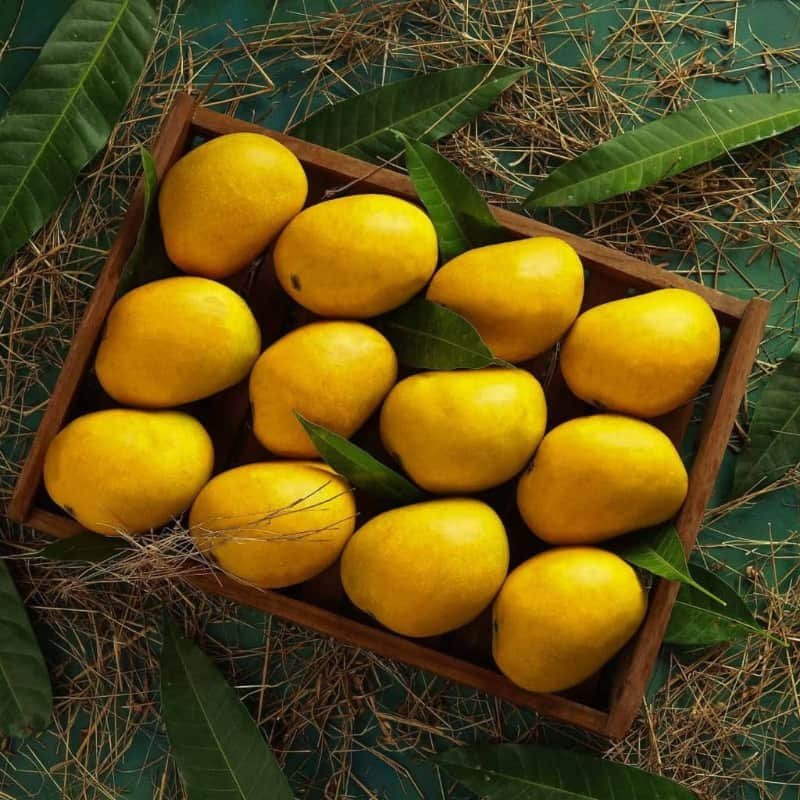
We grow Alphonso on the Konkan coast, and we still tell customers that Kesar makes better aamras for a long journey and that Badami is the smarter buy for a family that eats mango every day. Here is the honest comparison, variety by variety.
Every April the same question lands in our inbox: which mango should I actually buy? Most answers online come from people selling one variety, so they read like a scoreboard where the seller's fruit wins every round. Mangoes do not work that way — a fruit that is glorious sliced onto a plate can be the wrong choice for pulp travelling two days in a courier van.
What "better" actually means in a mango
Four things separate varieties: fibre, which decides whether a fruit suits a knife and fork or a bowl; aroma; the sugar-to-acid balance, which decides whether a mango tastes flat-sweet or has lift; and the flesh-to-seed ratio. None has one correct value — fibre is a fault in a table mango, a virtue in pulp.
Alphonso (Hapus)
Where it grows: The Konkan belt of Maharashtra — Ratnagiri above all, and Sindhudurg and Raigad. The laterite soil and sea air of that strip are why the geographical indication is tied to districts rather than the variety alone; we cover what the Alphonso GI tag actually means separately.
Season: Mid-March to late May, best in the second half of April; very early March fruit is often forced and disappointing. Fruit: Medium, oval with a shoulder and a distinct nose. Skin ripens golden yellow, often keeping a faint green tinge near the stalk. Flesh is deep saffron-orange; the seed thin and papery.
Honest verdict: The edge is twofold. The flesh is essentially fibreless, so it slices cleanly and eats like a dessert rather than something you wrestle with. And the aroma is in a class of its own, a warm almost resinous perfume that carries across a room from one open box. Sweetness sits high, with just enough acidity behind it.
The weaknesses are real too. Alphonso bruises easily, has a short window between perfect and over-ripe, and travels less forgivingly than sturdier fruit. It is by some distance the dearest of the four, partly from handling costs and partly because the name carries a premium. Some seasons also throw up spongy tissue, flesh gone pale and tasteless with no external sign.
Best for: Eating fresh. Shrikhand and aamrakhand, where the aroma is the whole point.
A cut Alphonso should smell strongly before you taste it. Fruit that looks perfect and smells of nothing was likely ripened chemically rather than in a grass bed — our guide on spotting real Ratnagiri Alphonso covers the other tells.
Kesar
Where it grows: Gujarat, above all the Gir region of Saurashtra. Season: Later than Alphonso, late April into June, so it carries the market once Konkan supply thins. Fruit: Smaller and rounder with a curved beak. The skin stays greenish-yellow even when ripe, which confuses buyers who judge by colour; inside, the flesh is the deepest saffron of the four.
Honest verdict: Kesar is what we recommend for pulp and aamras without hesitation, and we say that as Alphonso growers. The flesh is dense, the colour spectacular in a bowl, and the honeyed, faintly musky flavour survives blending, chilling and freezing far better than Alphonso's volatile perfume. The fine fibre near the seed is noticeable sliced and invisible once pulped. Thicker skin and firmer flesh mean it travels well, and it sits below Alphonso in price without feeling like a compromise.
Best for: Aamras, pulp, milkshakes and ice cream. Very good fresh too.
Payri (Pairi)
Where it grows: The Konkan coast alongside Alphonso. Season: The earliest of the four, often in markets by March, ahead of the main Alphonso flush. Fruit: Rounder and plumper, with a pink or red blush on the shoulder no other variety here reliably shows. Flesh is lighter yellow-orange, softer, much juicier and noticeably more fibrous.
Honest verdict: This is the traditional aamras mango of the Konkan, and any Maharashtrian household of a certain vintage will tell you ras made only from Alphonso tastes incomplete. Payri brings juice and a sharpness at the finish that stops a bowl of ras being one-note sweet. The classic practice is a blend, mostly Payri for body and tang with some Alphonso for aroma; ratios are in our Konkan aamras recipe. As a table fruit it is a harder sell, the fibre being real and the flesh loose. Cheaper than Alphonso, and too short-lived to travel far.
Best for: Aamras, especially blended, squeezing and drinking fresh, and traditional Konkan sweets.
Badami
Where it grows: Karnataka, mainly around Dharwad and Belagavi. Season: Broadly overlapping Alphonso, April into early June. Fruit: Similar oval shape, often a touch larger, smooth yellow skin, pale golden-orange flesh, low fibre and a thin seed.
Honest verdict: Badami is routinely sold as "Karnataka Alphonso", a label that does it a disservice in both directions. It is not Alphonso, and anyone paying Alphonso prices for it is being misled. It is also a genuinely good mango — clean, sweet, low in fibre, pleasant sliced. What it lacks is aroma; put a cut Badami beside a cut Alphonso and the difference is immediate. The flavour is gentler, which some people prefer. Where Badami wins outright is value: cheaper, more available, more forgiving in handling. For a household that wants mango daily through May rather than as an occasional treat, it is the sensible choice, and we would rather say so than pretend otherwise.
Best for: Everyday eating, fruit salads, milkshakes, desserts, budget pulp.
Two more worth knowing: Totapuri and Dasheri
Totapuri is the long, green, parrot-beaked mango of Karnataka, Andhra Pradesh and Tamil Nadu. Less sweet and quite tart, it is nobody's favourite table fruit, yet it is the backbone of India's processing industry: heavy yields, firm flesh that holds up to heat, low cost. Raw, it is excellent for pickle and mango curries.
Dasheri, from Malihabad in Uttar Pradesh, arrives June into July once the western varieties finish. Elongated, staying green-yellow, intensely sweet with very little fibre, it is a superb eating mango and fine for kulfi, though its low acidity makes for a flat aamras by Konkan standards.
Side by side
| Attribute | Alphonso (Hapus) | Kesar | Payri | Badami |
|---|---|---|---|---|
| Main region | Konkan, Maharashtra | Gir, Gujarat | Konkan coast | North Karnataka |
| Season | Mid-March to May | Late April to June | March to April (earliest) | April to early June |
| Size and shape | Medium, oval with a nose | Small-medium, round, curved beak | Medium, round and plump | Medium-large, oval |
| Skin when ripe | Golden yellow, green at stalk | Stays greenish-yellow | Yellow with pink or red blush | Smooth clear yellow |
| Flesh colour | Deep saffron-orange | Deepest saffron of the four | Lighter yellow-orange | Pale golden-orange |
| Fibre | Essentially none | Fine, mostly near the seed | Noticeable throughout | Very low |
| Seed size | Thin, papery | Thin | Medium, more flesh loss | Thin |
| Sweet vs acid | Very sweet, balanced by acidity | Sweet and musky, mild acidity | Sweet with pronounced tang | Sweet, low acidity, gentle |
| Aroma | Strongest, unmistakable | Strong, honeyed and musky | Moderate, fresh and tart | Mild |
| Shelf life when ripe | Shortest, two to three days | Longest, travels very well | Short, best eaten locally | Good, handles transit well |
| Price band | Premium | Upper-mid | Mid, regional | Affordable |
| Best use | Fresh slices, shrikhand, aamrakhand | Aamras, pulp, ice cream, shakes | Aamras, especially blended | Daily eating, desserts, bulk pulp |
How to choose, working backwards from what you want to make
- Eating fresh as the treat of the season: Alphonso, ideally Konkan fruit in late April — the one category where the premium is earned.
- Aamras to eat the same day: A blend, roughly two parts Payri to one part Alphonso. If Payri is unavailable, Kesar alone needs nothing.
- Pulp to freeze or courier: Kesar — better colour retention, better body, better tolerance of the journey.
- Shrikhand and aamrakhand: Alphonso — hung curd is heavy and mutes flavour, so you want the most aromatic fruit available.
- Milkshakes, smoothies, kulfi: Badami or Dasheri — milk and sugar flatten subtlety, so buy volume, not perfume.
- Pickle and raw-mango cooking: Totapuri or local raw varieties, never a premium ripening one.
- Feeding a household all season: Badami through April and May, plus a box of Alphonso for an occasion.
- Mango in June and July: Kesar first, then Dasheri. Anything sold as Alphonso in July deserves scrutiny.
Buying by weight is more honest than buying by count. A dozen small fruit and a dozen large fruit are both sold as a "dozen" yet can differ by a third in actual mango. Ask for box weight and grade before comparing prices.
What we would tell a friend
If you have never eaten a properly ripened Konkan Alphonso, buy one small box and eat it sliced, at room temperature, with nothing else on the plate. That is the case for the variety, and it makes itself. After that, choose by the job: Kesar for pulp and travel, Payri for real Konkan ras, Badami for daily eating, Totapuri for pickle, Dasheri for July. A seller who will not say so is describing their stock, not the fruit. If timing is your question, our season calendar sets out when each one peaks.
Frequently Asked Questions
Is Badami really the same as Alphonso?
No. Badami is a distinct Karnataka variety resembling Alphonso in shape and low fibre, which is why it is sold under that name. It is a good mango, but the aroma is milder and it should not command Alphonso pricing.
Which mango is best for aamras?
Kesar if you want a single variety, especially for pulp to be stored or transported. A Payri-led blend with some Alphonso for aroma if making it fresh, Konkan style.
Why does my Kesar still look green when it is ripe?
Normal for the variety — Kesar skin keeps a greenish cast at full ripeness. Judge it by give under gentle pressure, aroma at the stalk end and shoulders filling out. Waiting for full yellow means over-ripe fruit.
Which variety keeps longest after ripening?
Kesar, comfortably, with Badami next. Alphonso has the shortest window at peak, often two or three days, and Payri is similarly short-lived. Keep ripe fruit in a single layer, and refrigerate only when fully ripe.
Can I mix varieties in one order?
You can, but they will not ripen at the same rate, so sort them on arrival and check daily rather than treating the box as one batch. Alphonso and Kesar together is a sensible pairing.
Order Konkan Alphonso direct from the orchard
Hand-picked, naturally ripened in hay, and packed the day they leave the tree. Message us on WhatsApp for this season's availability and prices.