
Mango Milkshake, Pune Mastani and Alphonso Kulfi
A mango milkshake is three ingredients and still gets ruined more often than not — by ice, by too much milk, by a mixer left running. These are the proportions we use for shakes, for a proper Pune mastani, and for kulfi that tastes of Alphonso rather than of condensed milk.
The one rule behind all of them
Every recipe here is mostly mango. That sounds obvious until you measure what most shops pour: a glass of milk with a spoon of pulp, sweetened hard enough that the fruit is a colour rather than a flavour. Start from the other end — pulp first, milk only to loosen — and you will use less sugar, less milk and get a far better glass.
The second rule follows from it: heat and air are the enemy. A mixer left running warms the pulp by friction and whips air into it, which pales the colour and sets the aroma oxidising. Pulse in short bursts, stop while you can still see flecks of fruit, and serve immediately. This is the same argument we make at more length in the aamras guide, and it matters just as much here.
Do not add ice cubes to a mango shake. Ice melts into water, and water is the one thing that flattens Alphonso instantly. Chill the fruit and the milk beforehand instead, or use frozen pulp as your cold.
Mango milkshake, done properly
Serves 2 — 10 minutes — no cooking
- 3 ripe Alphonso, about 400 to 450 g of pulp, chilled 2 hours
- 250 ml cold full-fat milk — half the volume of the pulp, not double
- Sugar, 1 to 2 tsp, only if the fruit needs it
- 2 pinches cardamom, freshly crushed
- A pinch of salt
- Squeeze or scoop the pulp — the hand-squeeze in our mango cutting guide is the quickest route and wastes the least.
- Taste the plain pulp. This decides whether any sugar is needed at all. With good Ratnagiri fruit it usually is not.
- Blend the pulp alone in two or three short pulses until smooth.
- Add the cold milk and pulse twice more — just enough to combine. Long blending after the milk goes in is what makes a shake frothy and thin.
- Season with salt and cardamom, stir by hand, pour and drink. It does not improve with standing.
Milkshake, lassi or smoothie?
They get used interchangeably and they are three different drinks. A milkshake is fruit and milk. A lassi is fruit and curd, which brings a sourness that stands up well to very sweet fruit — use slightly more sugar and skip the cardamom. A smoothie in the Indian sense usually means fruit, curd or milk and ice, blended long. Of the three, the plain milkshake is the one that tastes most like the mango you put into it.
Freeze a tray of pulp cubes in the season. One or two dropped into the blender give you a thick, genuinely cold shake in the off-season, with no ice and no dilution.
Mango mastani, the Pune way
Mastani is not a thick milkshake, whatever the menus say. It is a layered dessert you eat with a spoon and finish with a straw: shake at the bottom, ice cream floating on top, dry fruit and jelly over that. It comes from Pune, and the honest version is generous to the point of being a meal.
Serves 2 — 15 minutes
- Mango milkshake as above, made slightly thicker — 400 g pulp to 150 ml milk
- 2 generous scoops mango or vanilla ice cream
- 2 tbsp chopped almonds and pistachios, lightly slivered
- 1 tbsp tutti frutti or chopped candied fruit
- A few fresh mango cubes, firm fruit, cut small
- Saffron threads, optional, soaked in a teaspoon of warm milk
- Chill two tall glasses in the freezer for ten minutes. This is the difference between mastani and mango soup.
- Pour the thick shake to about two-thirds, dropping a few mango cubes in as you go.
- Float the ice cream on top — do not stir it in.
- Scatter the nuts, tutti frutti and saffron milk over the scoop.
- Serve with both a spoon and a straw, and eat it the minute it reaches the table.
Alphonso kulfi, no cooking required
Traditional kulfi is milk reduced for an hour until it thickens and browns slightly. It is worth doing once. But mango kulfi made that way fights itself — the reduced milk flavour and the Alphonso aroma pull in opposite directions — so for mango we use the quick set, and put the effort into the fruit instead.
Makes 6 moulds — 20 minutes, plus 6 to 8 hours freezing
- 400 g Alphonso pulp, thick, from fully ripe fruit
- 200 ml condensed milk
- 200 ml fresh cream, chilled
- 2 tbsp milk powder — the quiet ingredient; it stops ice crystals forming
- 1/4 tsp cardamom, crushed
- A pinch of salt
- Slivered pistachio to finish
- Whisk the cream to soft peaks — stop well before it stiffens.
- Stir the pulp, condensed milk, milk powder, cardamom and salt together by hand until smooth. Do not use the mixer here; you want no air in the base.
- Fold the cream in gently, in three additions.
- Pour into moulds, leaving a centimetre at the top, and tap each one down to settle it.
- Freeze 6 to 8 hours, or overnight.
- Unmould by rolling the mould between your palms for a few seconds, or dipping it in room-temperature water for three. Finish with pistachio.
Two variations worth knowing
Without condensed milk: replace it with 150 ml of milk reduced by half with 3 tbsp sugar and cooled completely. Cleaner mango flavour, one extra step.
Mango popsicles for children: pulp, a splash of milk, no cream and no sugar, frozen in the same moulds. Four ingredients down to two, and considerably better than anything sold at the gate.
| Drink | Pulp to liquid | Fruit stage | Keeps |
|---|---|---|---|
| Milkshake | 2 : 1 pulp to milk | Fully ripe | Drink at once |
| Lassi | 1 : 1 pulp to curd | Fully ripe | 2 to 3 hours, cold |
| Mastani | 3 : 1 pulp to milk | Fully ripe, plus firm cubes | Serve immediately |
| Kulfi | 1 : 1 pulp to dairy | Fully ripe to overripe | 3 weeks, sealed |
| Popsicle | Almost all pulp | Fully ripe | 1 month, sealed |
Which fruit to use — and in the off-season
The softest mangoes in the peti are the right ones here. A fruit a day past perfect has more sugar, more aroma and pulp that leaves the stone cleanly; save the firm fruit for cutting and use the soft ones for everything on this page.
Out of season, frozen pulp from your own stock is far better than any packaged option — which is the argument for filling the freezer in May, covered in our storage guide. Failing that, tinned Ratnagiri Alphonso pulp works genuinely well in kulfi and mastani, where the cream, sugar and freezing are already changing the texture, and less well in a plain milkshake where there is nothing to hide behind.
The link below is an affiliate link. If you buy through it we earn a small commission at no extra cost to you. We link to it because we use one. Full disclosure.
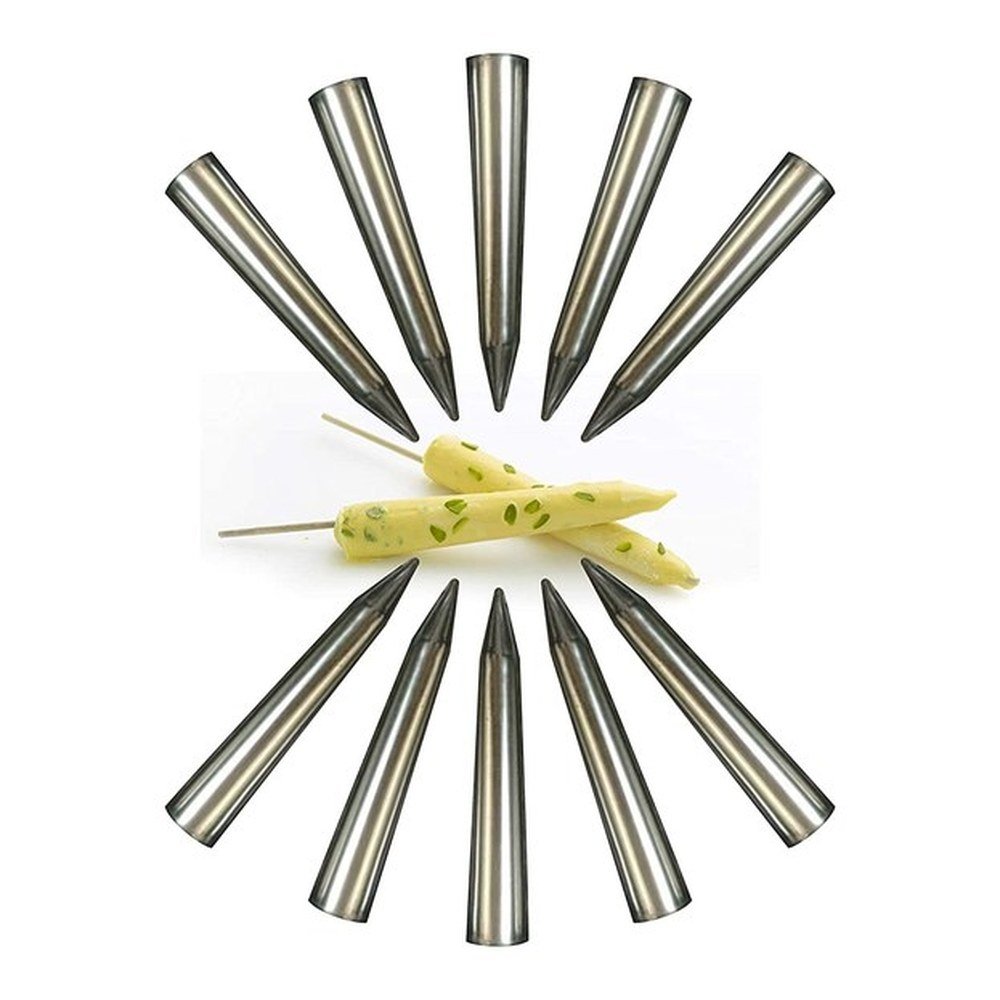
Steel kulfi moulds, and why not plastic
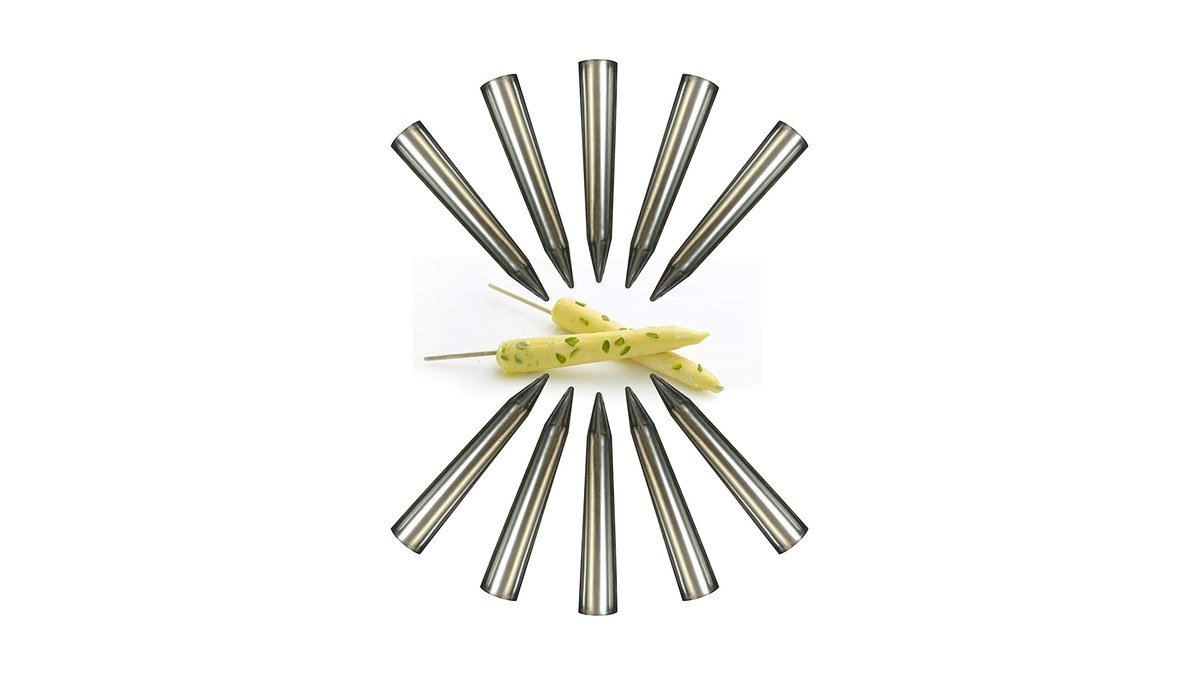
A set of stainless steel kulfi moulds is the one piece of equipment on this page worth owning. Steel conducts cold quickly, so the kulfi sets faster and with smaller ice crystals than it does in a plastic mould — the same reason kulfiwalas have always used metal — and it unmoulds with a few seconds of hand warmth instead of a fight.
Six moulds is the useful size: it matches one batch from three or four mangoes, and they stack in a door shelf. The cone shape is traditional; the short matka shape is easier to eat with a spoon if children are involved.
See it on AmazonCheck whether lids are included and how they seal before you buy — an open or loosely-capped mould takes on freezer smell within a week, and a sheet of foil pressed over the top is the usual workaround.
Sugar, honestly
A tall mango milkshake made from three Alphonso is roughly three mangoes of sugar, whether or not you add any. That is fine as an occasional glass and worth knowing about if you drink one daily through May, or if anyone at the table is watching their intake — our nutrition guide goes into portions properly. Adding no sugar at all is the easiest improvement available, and with good fruit nobody notices it is missing.
The test in our kitchen is simple. Pour a little of the plain pulp into a katori before you start. If the finished glass does not smell as good as that katori, you have added something you did not need.
Frequently Asked Questions
How many mangoes do I need for two glasses of milkshake?
Three medium Alphonso, roughly 400 to 450 g of pulp, with 250 ml of cold milk. Most recipes call for far more milk than that and end up tasting of milk.
Why did my mango milkshake turn bitter?
Almost always over-blending. Long blending warms the pulp and whips in air, and traces of skin or the fibrous flesh right against the stone turn bitter when they are pulverised. Pulse briefly, and keep the last scrapings off the stone out of blended drinks.
What is the difference between mango mastani and a mango milkshake?
Mastani is a Pune dessert: a thick mango shake in a chilled glass, topped with a floating scoop of ice cream, dry fruit, tutti frutti and fresh mango cubes, eaten with a spoon. A milkshake is simply fruit and milk.
Can I make kulfi without condensed milk?
Yes. Reduce 300 ml of milk to about half with three tablespoons of sugar, cool it completely, and use it in place of the condensed milk. The mango flavour comes through more cleanly.
Can I use tinned mango pulp for these recipes?
For kulfi, mastani and popsicles, yes — look for a tin that specifically says Ratnagiri Alphonso, and check whether it is sweetened before adding any sugar. For a plain milkshake, fresh or home-frozen pulp is noticeably better.
Order Konkan Alphonso direct from the orchard
Hand-picked, naturally ripened in hay, and packed the day they leave the tree. Message us on WhatsApp for this season's availability and prices.