
Alphonso Mango Nutrition, Sugar and the Diabetes Question
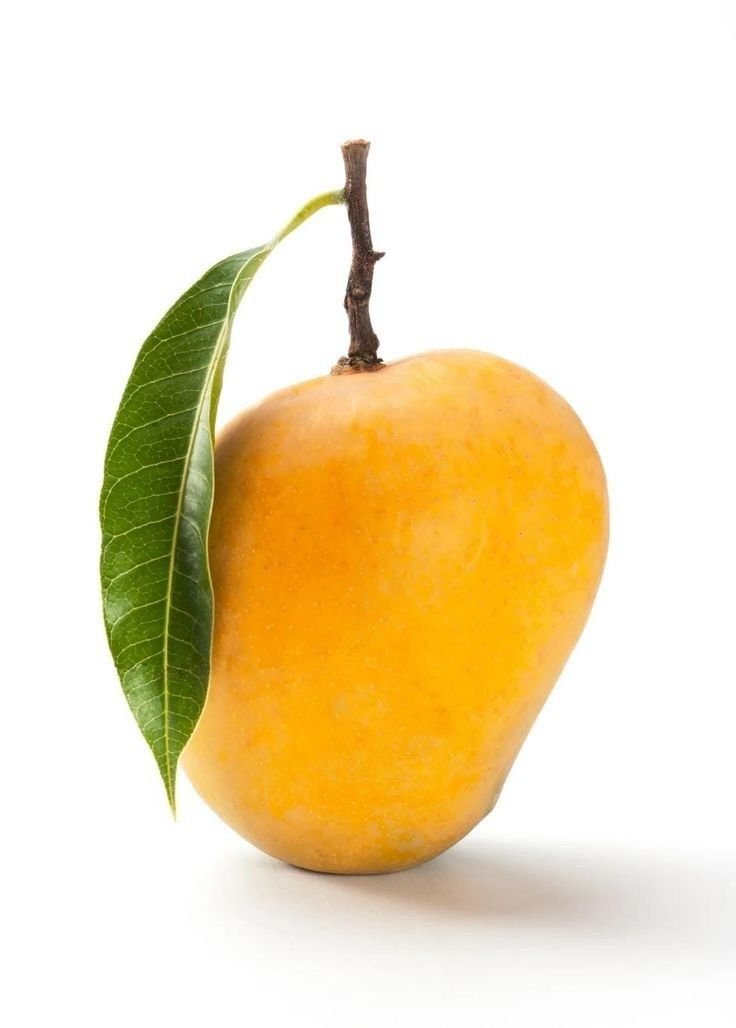
Every April our phone fills with the same question, usually from a son or daughter ordering for a diabetic parent: is it safe? The honest answer is more interesting than yes or no, and it turns on portion size, on the gap between a mango and a glass of aamras, and on a number most people have never heard of.
Please read this first. We grow and sell mangoes; we are not doctors or dietitians. What follows is general information about a food, not medical advice, and it cannot account for your medication, your readings or the rest of your diet. If you are managing diabetes, pregnancy, kidney disease or any other condition, follow the guidance your own doctor or dietitian gives you for your own case.
What is actually inside a ripe Alphonso
A ripe Hapus is roughly four-fifths water. Most of the rest is carbohydrate, and most of that is sugar — chiefly sucrose, with smaller amounts of fructose and glucose — with very little protein and almost no fat. On that plain reading a mango is a sweet, watery fruit, and no affection for our own orchards changes it.
What the plain reading misses is what the sugar arrives packaged with: vitamin C, the carotenoids the body converts into vitamin A, useful amounts of vitamin E, folate and potassium, a modest but real quantity of dietary fibre, and polyphenols concentrated in and just under the skin. That packaging is the whole argument of this article.
Why the flesh is saffron rather than yellow
The colour is carotenoid pigment, beta-carotene above all — the same family that colours carrot and papaya. Beta-carotene is a precursor the body converts to vitamin A as it needs it, a different arrangement from taking preformed vitamin A. Depth of colour tracks roughly with carotenoid content, and since carotenoids are fat-soluble, eating mango with a little fat — curd, milk, a few nuts — helps absorption, which is what most Indian households do anyway.
The numbers, per 100 g and per fruit
These are ranges, not machine readings. Published composition values for ripe mango differ between datasets, and the fruit varies: a mango picked at correct maturity and ripened slowly in straw is sweeter than one rushed to a shelf. A medium fruit here means a typical Alphonso of 200 to 250 g whole, giving 130 to 170 g of pulp — smaller than a Kesar or a Badami, so fruit-for-fruit comparisons flatter it.
| Nutrient | Per 100 g pulp | Per medium fruit (~150 g pulp) | Note on the range |
|---|---|---|---|
| Energy | ~60–75 kcal | ~90–115 kcal | Higher end for very ripe, very sweet fruit |
| Total carbohydrate | ~15–17 g | ~23–26 g | Rises as starch converts to sugar while ripening |
| Of which sugars | ~13–15 g | ~20–23 g | Naturally occurring; none added |
| Dietary fibre | ~1.5–2.5 g | ~2.5–3.5 g | Largely lost in strained juice |
| Protein | ~0.5–0.9 g | ~0.8–1.4 g | Negligible in practice |
| Fat | ~0.2–0.4 g | ~0.3–0.6 g | Negligible |
| Vitamin C | ~25–45 mg | ~35–65 mg | Falls with long storage and heat |
| Beta-carotene | ~500–2,500 µg | ~750–3,700 µg | Wide genuine variation; deep-coloured fruit sits high |
| Vitamin E | ~0.5–1.0 mg | ~0.8–1.5 mg | Modest, but unusual for a fruit |
| Folate | ~30–45 µg | ~45–70 µg | Contributes to intake; not a major source |
| Potassium | ~150–180 mg | ~230–270 mg | Relevant if told to restrict potassium |
The calorie figure usually surprises people in the pleasant direction. One medium Alphonso sits in the range of a small bowl of poha or two plain rotis — not a diet food, but not the calorie bomb its reputation suggests.
Whole fruit, aamras and milkshake are three different questions
A mango eaten in pieces, or the old way over the sink, arrives with its fibre intact. You chew, you eat slowly, and volume self-limits: two whole mangoes at a sitting feels like a lot, so most people stop.
Aamras is a different food. Pulp four mangoes into a bowl and the chewing is gone and the volume compressed, so five minutes does what twenty would have. Add sugar or jaggery, as many family recipes do, and there are added sugars on top of the fruit's own. Our Konkan aamras recipe uses no sugar at all, because good Ratnagiri fruit does not need it — though even unsweetened aamras does not behave like a single whole mango.
A milkshake with full-cream milk, ice cream and sugar is a dessert with mango in it. Nothing wrong with a dessert — it simply should not be counted, in your head or in your day's budget, as "some fruit".
For aamras with less of the rush: mash by hand rather than blending smooth, skip the added sugar, and serve it with roti or puri rather than on its own.
Glycemic index versus glycemic load
Glycemic index ranks a food by how much 50 g of its available carbohydrate raises blood glucose against a reference. Reported values for ripe mango generally sit in the low-to-mid fifties, with published figures spanning the forties to the sixties depending on variety and ripeness. That is the low end of the medium band — lower than most people assume, and lower than white bread or potato.
The trouble is the standardised 50 g. Nobody eats 50 g of carbohydrate; they eat a mango. Glycemic load scales GI to the actual portion: GI multiplied by the grams of available carbohydrate in your serving, divided by 100.
For one medium Alphonso — about 23 g of available carbohydrate at a GI in the low fifties — the load lands near 11 to 13, low-to-moderate, roughly a small serving of rice. Half a mango sits in the low band. Four mangoes blended with sugar do not, and the arithmetic shows why: the GI has not moved at all, but the load has quadrupled. GL is the more useful number because it responds to the thing you control.
The diabetes question, answered honestly
Mango is not forbidden for people with diabetes. Dietary guidance in India and elsewhere generally treats fruit as part of a normal diabetic diet, with attention to quantity and to the day's total carbohydrate. What mango is not is a free food, or something to add on top of an unchanged diet for six weeks because it is the season.
The practical levers are few. Portion is the main one — half to one medium fruit is where most guidance for a fruit serving lands, rather than three at a sitting. Whole fruit beats pulp, and pulp beats juice. Pairing helps: mango after a meal with protein and fat, or with a katori of dahi, tends to give a gentler curve than mango alone on an empty stomach. And it should be substitution, not addition — if the mango comes in, some rice, roti or sweet goes out of that meal.
Where honesty requires us to stop is the individual response, which varies between people and in the same person on different days with medication timing, sleep, activity and the rest of the plate. Anyone on insulin or glucose-lowering medication should be guided by their doctor and, where available, their own meter or CGM rather than a table in an article. If control is poor at the moment, that is a conversation to have before the season, not after. And mango does not treat, prevent or cure diabetes or anything else; any seller who says otherwise is selling something.
"Mango is heating" and "mango makes you fat"
The pitta and prickly-heat claim
Every Konkan family has heard that too much mango brings boils, prickly heat or acidity. Traditional Ayurvedic thinking classes mango, especially unripe fruit and mango in quantity, as heating, and prescribes soaking it in cold water before eating. We are not in a position to adjudicate a traditional framework against a clinical one and will not pretend to.
Ordinary explanations also fit the observations. Mango season is the hottest part of the year, when prickly heat is common regardless of diet. The sap at the stem end genuinely irritates skin and lips in some people. Large quantities of any sugary food can aggravate acidity. And a few people have a real oral allergy response to mango, related to latex and to the same plant family as cashew. The traditional soak, incidentally, helps on every one of these counts.
The weight claim
Mangoes have no special power to add weight; a medium fruit at roughly 100 kcal is a modest snack. What adds weight is how mango is eaten in season — two or three after a full lunch, aamras with puri, a daily milkshake, all in addition to normal meals rather than in place of anything. Over six weeks that arithmetic is real, and it has nothing to do with the mango being uniquely fattening.
Who should be more careful
- Poorly controlled diabetes, or insulin use — not a ban, but a portion and timing question for your doctor, ideally settled before the season.
- Gestational diabetes — follow the carbohydrate plan you have been given; it is usually stricter on fruit portions and timing.
- Kidney disease with a potassium restriction — mango is not extreme, but it counts towards the daily limit.
- Anyone actively managing weight — count it in, do not add it on.
- Itching or tingling in the mouth after mango — worth mentioning to a doctor rather than pushing through, especially if you react to cashew or latex.
- Very young children — small pieces, no stone, and let them go slowly.
How we think about it
We sell mangoes for a living, so treat our view with the scepticism it deserves. Still, the position we hold in our own homes is this: one good mango, eaten whole, in season, in place of something else sweet, is a reasonable thing for most healthy adults to enjoy daily for the few weeks it is here. Beyond that, the number that matters is not the glycemic index. It is how many you ate.
Frequently Asked Questions
How many mangoes can a person with diabetes eat in a day?
There is no single number for everyone. Common guidance treats half to one medium mango as a fruit serving, eaten within the day's carbohydrate allowance rather than on top of it, and preferably as whole fruit with or after a meal. Your own limit depends on medication, control and diet, so ask your doctor or dietitian.
Is Alphonso higher in sugar than other varieties?
Alphonso is prized for its sugar-to-acid balance and dense, low-fibre pulp, so it tastes sweeter than many varieties. Measured sugar content across common Indian varieties is broadly similar, and ripeness usually matters more than variety. Alphonso fruits are also smaller, so one fruit often carries less total sugar.
Does eating mango at night cause problems?
There is no strong general rule. Some people find a large sweet portion near bedtime uncomfortable or see a higher morning reading; others notice nothing. If you track glucose, test your own response rather than follow a blanket rule.
Is unsweetened aamras better than aamras with sugar?
Yes, in the straightforward sense that it has no added sugar, and good ripe Alphonso rarely needs any. It still concentrates several fruits into one serving and loses the effect of chewing, so it is not equivalent to one whole mango.
Does soaking mangoes in water before eating do anything?
It rinses off sap residue from the stem end, a genuine irritant for some people, and it cools the fruit. Those are real if modest benefits. The claim that soaking removes the fruit's heating quality belongs to a different framework than the nutritional one, and we cannot verify it either way.
Order Konkan Alphonso direct from the orchard
Hand-picked, naturally ripened in hay, and packed the day they leave the tree. Message us on WhatsApp for this season's availability and prices.