
The Konkan Monsoon Pantry: What a Coastal Kitchen Lays In Before the Rains
The Konkan gets somewhere between two and a half and four metres of rain between June and September. For a good part of that there is no fresh fish, the roads to the smaller villages are unreliable, and the air sits at ninety per cent humidity for weeks at a stretch. The pantry that gets a Konkan household through it is assembled in May, and almost none of it is improvised.
Why the monsoon changes the kitchen, not just the weather
Three things happen at once at the start of June, and together they explain the entire shape of the coastal monsoon diet.
The fishing stops. There is an annual ban on mechanised fishing along the west coast through the monsoon — roughly June and July — to let fish spawn. Small non-mechanised boats still go out when the sea allows, which in a bad week is not often. For a region whose everyday protein is fish, that is a two-month gap that has to be planned for.
The mango season ends. Alphonso finishes in the first week or two of June. Everything that is going to be preserved from that crop — pulp, papad, pickle — is made in the last fortnight of May, in a hurry, usually by several people at once.
The humidity arrives and does not leave. This is the one outsiders underestimate. Salt cakes. Jaggery weeps. Ground masala goes from powder to paste in an open jar within days. Rice develops weevils. Any monsoon pantry plan that does not account for moisture is just a shopping list.
The old word for the pre-monsoon stocking-up is simply bharni — the filling. It happens through May, and the household that leaves it until the first week of June regrets it.
Rice first, and specifically parboiled red rice
The Konkan staple is ukda tandul — parboiled rice — and usually a red or pink-husked variety. Kerala's Matta rice is the same idea and is what most people outside the Konkan can actually buy.
Parboiling means the paddy is soaked and steamed before milling, while the grain is still in its husk. Two things follow from that. Nutrients from the bran migrate into the grain instead of being polished away, so parboiled rice holds more of its thiamine and minerals than the same rice milled raw. And the starch gelatinises and re-sets, which makes the cooked grain firmer and separate rather than soft and clinging.
The practical monsoon argument is simpler: parboiled rice is harder, keeps better in damp air, and resists weevils noticeably longer than polished white rice. It also stands up to being eaten with a thin curry twice a day for four months without turning to paste, which white rice does not.
It cooks slowly — expect forty minutes rather than twenty — and it wants more water. If you have only eaten polished rice, the first pot will seem wrong. The second will not.
Masala, ground before the air gets wet
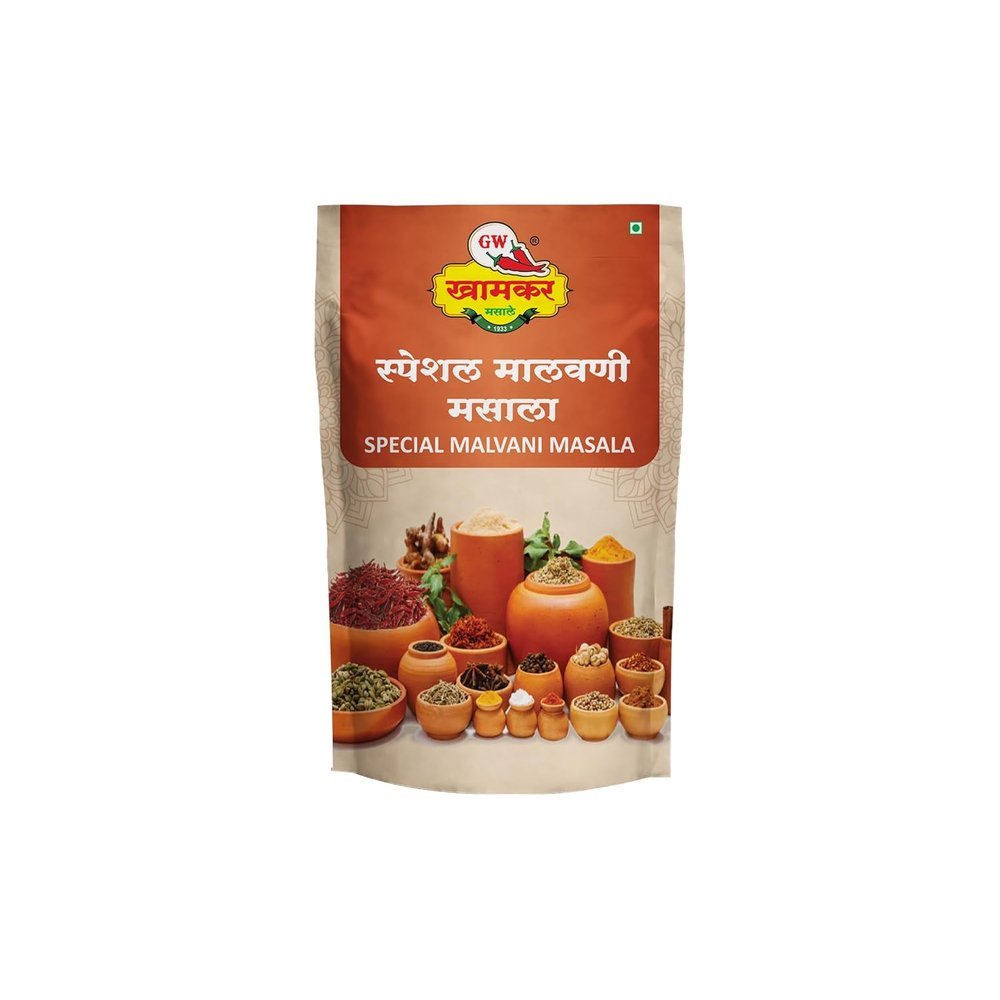
Malvani masala is the Konkan's own blend and it is not a milder Goan masala or a coastal garam masala, whatever a packet says. It is built on dried red chilli — usually a mix of a hot variety and a colour variety — with coriander, and then a long tail of whole spices: black pepper, cloves, cinnamon, star anise, stone flower, nutmeg, poppy seed, caraway. Some households run to twenty-odd components. It is hotter and more aromatic than most ready blends from outside the region, and it is what gives a Malvani fish curry its particular depth.
Households that make their own make it in April or May, on a dry day, because chillies will not dry and spices will not grind once the humidity is up. If you are buying it, buy before the rains for the same reason — a packet ground in March and sealed is a better thing than one ground in July.
The link below is an affiliate link. If you buy through it we earn a small commission at no extra cost to you, and the price is the same either way. Full disclosure.
Buy a small packet of Malvani masala, not a big one
Ground masala is at its best for about three months and then it flattens, and in coastal humidity an opened kilo pack will cake long before you reach the bottom of it. Two small packets bought two months apart will cook better than one large one bought in May, even though the large one looks like the sensible buy.
See Malvani masala on AmazonGrinding your own is better and most people will not. This is the honest fallback.
The souring agents
Kokum, mostly. Dried kokum rind is the Konkan's sour, it keeps all monsoon in an airtight jar, and it does the job in fish curry, amti and solkadhi alike. We have written about it at length in the kokum and solkadhi guide, including how to tell decent rind from a packet that is mostly salt.
A kokum syrup or concentrate is worth having alongside the rind. It is the base for kokum sherbet, which is a summer drink rather than a monsoon one, but it also means you can sour something in thirty seconds when the rinds need half an hour of soaking.
Tamarind has a place in a Konkan pantry but a smaller one than inland. It browns coconut gravies, which is most of what gets cooked here.
Coconut, in the forms that keep
Fresh coconut is the foundation of Konkan cooking and in the monsoon it is also the thing most likely to be mouldy by the time you get it home. Two hedges are worth keeping.
Dry copra, which grates and roasts and lasts indefinitely in a sealed tin. Not the same as fresh for a wet gravy, excellent for a dry masala.
Coconut milk powder, which is the pragmatic one. Reconstituted at full strength it is genuinely close to a first press, it keeps for months sealed, and it means solkadhi on a wet Tuesday is a five-minute decision rather than a trip to the market. Nobody in the Konkan will tell you it is better than a fresh coconut. Plenty of Konkan kitchens keep a packet anyway.
Jaggery, and specifically palm jaggery
Cane jaggery is what most of India means by gur. The Konkan coast also has palm jaggery, made from the sap of the palmyra or coconut palm, darker and softer with a faintly smoky, almost caramel note that cane jaggery does not have. It is what goes into a good modak filling and into the sweet-sour balance of several Konkan vegetable dishes.
It is also the single most moisture-hungry thing in the pantry. Palm jaggery in a loose jar in August will be sitting in its own syrup inside a week. Buy it in a small quantity, keep it in a screw-top glass jar with as little air in it as you can manage, and keep it away from the stove.
The mango tail
The last fortnight of May is when the surplus gets preserved, and what comes out of it feeds the monsoon.
Tinned Alphonso pulp is the honest off-season aamras. Not a substitute for fresh fruit and nobody pretends it is, but canned at ripeness it keeps the aroma in a way frozen fruit does not. It is also the only form in which you will eat Ratnagiri Alphonso in August.
Aam papad — mango pulp spread thin and sun-dried in layers — is the other one, and it is made in May precisely because there is no sun to do it in later.
If you have fruit of your own to put away, pulping and freezing it holds the aroma far better than freezing cut fruit does. The method is in the aamras guide.
Dried fish, said honestly
We sell mangoes, not fish, and we are not going to recommend a brand of sukat we have not bought. But a monsoon pantry article from the Konkan that left out dried fish would be a dishonest one, because it is what fills the two months when the boats are in.
Bombil — Bombay duck — dried on frames along the coast through the dry months, and fried or curried through the wet ones. Sukat, tiny dried prawns, which go into a chutney with coconut and chilli that is one of the best things in the regional repertoire. Both are bought before the rains from someone the household already buys from, and both are kept double-wrapped and well away from everything else, because the smell migrates into anything porous within a day.
Keeping any of it dry
This is where most pantry plans fail, and the fixes are old and dull and they work.
- Glass and steel, with screw tops. Clip-lid jars with a rubber gasket are fine; a plastic container with a press-on lid is not, in this climate.
- Fill jars full. Air is what carries the moisture. A half-empty jar spoils its contents faster than a full one of the same size.
- Roast and cool whole spices before they go in. Two minutes dry in a pan drives off the moisture they arrived with. Let them come fully to room temperature first — warm spices in a sealed jar create their own condensation.
- Dried red chillies and a few neem leaves in the rice. The traditional weevil deterrent, and it works well enough that it is still standard practice in households that could afford anything else.
- A handful of rock salt in a muslin pouch in the masala jar, swapped when it clumps. Crude dehumidifier, costs nothing.
- Nothing on the floor and nothing on the outer wall. Both sweat in a Konkan July.
What this looks like as a list
| Item | Why it is in a monsoon pantry | Buy before | Keeps |
|---|---|---|---|
| Parboiled red rice | Staple; resists damp and weevils better than polished rice | End of May | The season, if kept sealed with chilli |
| Malvani masala | The base of nearly every curry; cannot be ground in wet air | May | About 3 months at full strength |
| Dried kokum rind | Souring agent that does not brown coconut gravy | June, from that year's crop | 6–8 months plain, over a year salted |
| Coconut milk powder | Hedge against mouldy coconuts and closed markets | Any time | Months, sealed |
| Palm jaggery | Sweet-sour balance; modak filling | May, in small quantity | Weeps within weeks once opened |
| Tinned Alphonso pulp | The only honest aamras after June | Any time | Until the tin is opened |
| Aam papad | Preserved mango; made in May because there is no sun later | May–June | Several months, sealed |
| Dried fish | Protein through the fishing ban | Before June | The season, wrapped separately |
Most of these sit on the pantry shelf if you want to see what we actually point people at, and the storage end of it — the jars and the bins — is on the storing and keeping shelf.
Frequently Asked Questions
Is ukda tandul the same as Matta rice?
Close enough to cook with interchangeably. Both are parboiled and both are red or pink-husked. Ukda tandul is the Marathi term and covers several local varieties; Matta is the Kerala one, and it is the variety most widely available outside the Konkan.
Why does my jaggery turn to syrup in the monsoon?
Jaggery is hygroscopic — it pulls water out of the air — and palm jaggery more so than cane. The only real defences are a tight screw-top glass jar, as little air in it as possible, and buying small quantities more often rather than a big block in May.
Can I use ordinary garam masala instead of Malvani masala?
You will get a decent curry and it will not be a Malvani one. Malvani masala is chilli-led with a long aromatic tail; most garam masalas are warm-spice-led with little chilli. If you must substitute, use a Kashmiri chilli powder alongside the garam masala to get somewhere closer.
How long does ground masala actually stay good?
About three months at full strength, less in an opened jar in coastal humidity. It does not become unsafe, it becomes flat — the volatile oils that carry the aroma are gone and you are left with colour and heat.
Is there fresh fish in the Konkan during the monsoon at all?
Some. The ban is on mechanised trawling; small non-mechanised boats still go out when the sea is workable, which in July is not often. What lands is expensive and irregular, which is precisely why the dried fish was bought in May.
Order Konkan Alphonso direct from the orchard
Hand-picked, naturally ripened in hay, and packed the day they leave the tree. Message us on WhatsApp for this season's availability and prices.