
Kokum and Solkadhi: The Konkan Souring Agent Explained
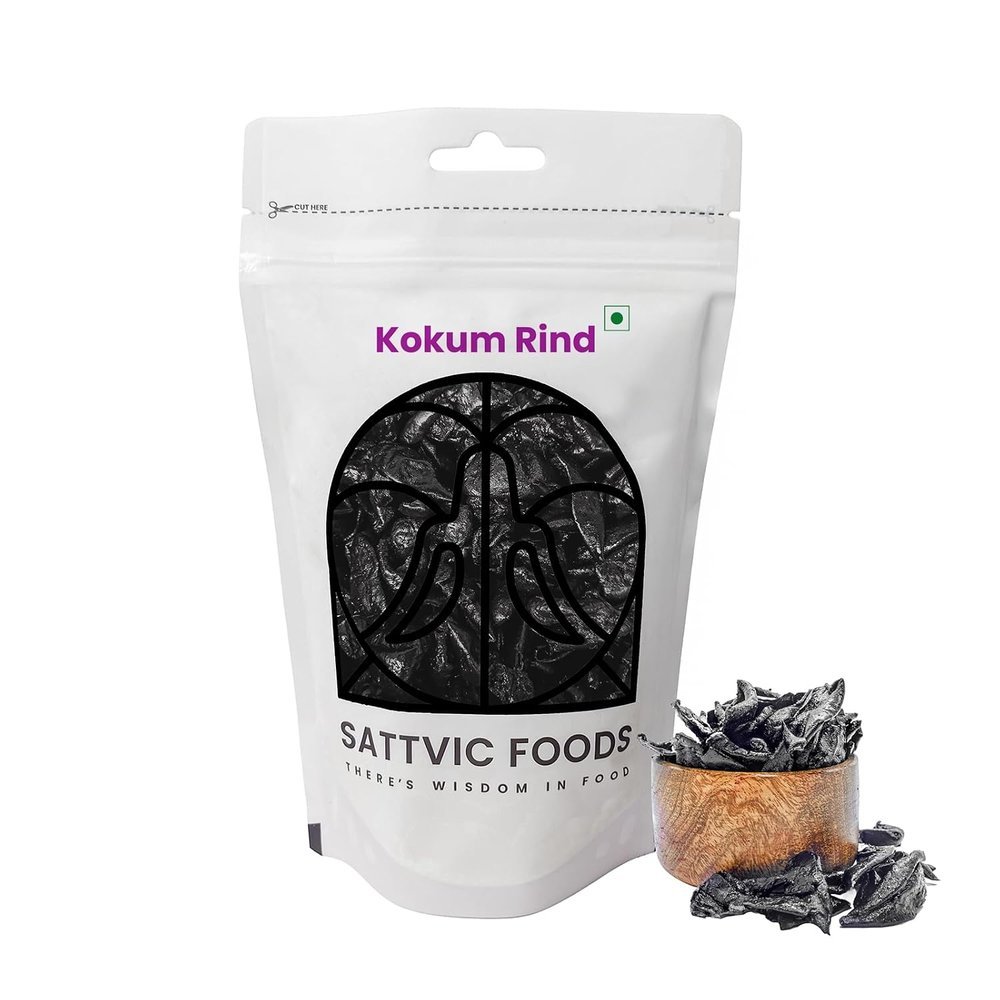
Every regional Indian kitchen has its own sour. The north has amchur, the south has tamarind, Gujarat has lime and jaggery together. The Konkan has kokum, and the thing that makes it different from all of those is that it sours a dish without colouring it and without the dull, flat edge that tamarind leaves behind.
What kokum actually is
Garcinia indica is a slim evergreen tree that grows down the Western Ghats and all through the Konkan, often at the edge of the same orchards that grow Alphonso. It fruits in April and May — the same weeks as the mango, which is why both end up being processed in the same fortnight by the same households.
The fresh fruit is called ratamba. It is about the size of a small plum, deep purple-red, with a thin sharp pulp around four or five seeds. Almost nobody sells it fresh outside the Konkan because it bruises within a day. What travels is the rind, split off the fruit, and that is what the rest of India calls kokum and what Marathi calls aamsul.
The names cause more confusion than they should. Aamsul and kokum are the same thing. Ratamba is the fresh fruit the rind came from. Bhirand is what it is called in parts of Goa and north Karnataka, sometimes for a closely related species. If a packet says any of those, you are in the right aisle.
Why it is not simply a substitute for tamarind
They are both sour and they are not interchangeable, and this is the single most useful thing to know about kokum.
The acid is different. Tamarind's sourness is mostly tartaric acid. Kokum's is mostly hydroxycitric acid, which reads as a cleaner, brighter sour with a faintly sweet tail rather than the deep muddy sourness tamarind gives.
The colour is different, and this is the practical one. Tamarind pulp browns everything it touches — a pale coconut curry turns the colour of weak tea. Kokum bleeds a clear pink-red that either disappears into a red masala or turns a white coconut gravy a pale rose, which is exactly the effect solkadhi depends on. For any Konkan fish curry built on fresh coconut, this is the whole reason kokum is used and tamarind is not.
The quantity is different. Three or four rinds will sour a curry for four people. Put in ten and the dish turns astringent and faintly bitter in a way that cannot be rescued with sugar. Tamarind forgives over-use far more than kokum does.
Rule of thumb: three to four rinds for a curry for four, six to eight for a jug of solkadhi, one or two in a dal. Add at the end, not at the start — long boiling turns the sourness harsh.
How the rind is made, and why that decides what you should buy
The fruit is halved, the rind separated from the pulp and seed, and then dried in the sun over several days. There are two traditions and they produce genuinely different products.
Plain sun-dried. The rind goes out on a mat and dries until it is leathery. The result is a deep reddish-purple-black, pliable, and faintly sticky from its own sugars. This is the one you want for cooking.
Salt-cured. Salt is rubbed into the rind before and during drying. It preserves better and much longer in a humid coastal house, which is why it exists, and it comes out blacker, wetter and heavier. It is perfectly good — but you are buying salt by weight along with the kokum, and you have to cut the salt in the dish to compensate. A packet that does not say which it is, and which feels damp and heavy, is usually salted.
Reading a packet of kokum
- Buy whole rinds, not powder. Kokum powder is routinely cut with salt, and sometimes with other acidulants, because nobody can tell by looking. Whole rind is self-evidencing — you can see what you have.
- It should be pliable, not brittle. A rind that snaps has been over-dried or is old, and it will give you colour without much flavour. A good one bends and feels slightly tacky.
- Deep purple-black, not grey or dusty brown. Grey usually means it was dried in poor weather or has been sitting too long.
- It should smell of something. Faintly fruity and sour at the edge of sweet. No smell means no flavour left.
- Weight is a warning sign. Kokum is light. A packet that feels dense for its volume has either been salted heavily or has picked up moisture.
The link below is an affiliate link. If you buy through it we earn a small commission at no extra cost to you, and the price is the same either way. Full disclosure.
Buy the rind, not the powder
This is the part worth spending the extra thirty rupees on. Whole dried rind lets you see exactly what you have bought — the colour, the pliability, whether it has been salted — and none of that is visible in a packet of powder. It also lasts far longer, because the sugars and acids are still sealed inside the rind rather than exposed to air.
See dried kokum on AmazonIf you have a Maharashtrian grocer within reach, buy it there instead and squeeze the packet first. This is for everyone who does not.
Solkadhi, properly
Solkadhi is the pink drink that follows a fish-and-rice meal all down the Konkan coast. It is coconut milk soured with kokum, sharpened with garlic and green chilli, and drunk at the end rather than with the meal — the coconut settles the chilli and the kokum settles the rice.
There is no single correct recipe. Malvan makes it thinner and garlickier; Ratnagiri households often make it thicker and gentler. What follows is roughly how it gets made in ours.
What you need, for four
- Six to eight kokum rinds
- Thick coconut milk from half a fresh coconut — the first press, not the watery second
- Two or three cloves of garlic
- One green chilli
- Salt, and a pinch of sugar if your kokum is very sharp
- Coriander leaves, optional and slightly controversial
How
Soak the rinds in about a cup of warm — not hot — water for twenty to thirty minutes. Squeeze them out with your fingers until the water is a deep pink and the rinds have gone pale. Keep the liquid, discard the rinds.
Crush the garlic and chilli together to a rough paste. A stone is better than a mixer here; you want them bruised, not pulverised, so the flavour comes out slowly rather than all at once.
Mix the coconut milk with the kokum water, stir in the garlic-chilli paste and the salt, and leave it alone for fifteen minutes. That is the whole method. Taste, adjust the salt, and add a little more kokum water if it is too mild.
Never boil solkadhi. Coconut milk splits at a simmer and the drink turns grainy and grey. Everything in it is already cooked or raw by design. If a recipe tells you to heat it, that recipe is wrong.
The four mistakes
Boiling it. See above. The most common and the least recoverable.
Thin coconut milk. Tinned coconut milk diluted to the consistency of water gives you pink liquid, not solkadhi. You want the first press, or a tin of thick milk used without much thinning. Coconut milk powder reconstituted at full strength works better than most people expect.
Too much kokum. Ten rinds instead of six turns it astringent and the colour goes from rose to a flat maroon. If you have overdone it, more coconut milk is the only fix.
Chopping the garlic instead of crushing it. Chopped garlic sits in the drink as little hot pieces. Crushed garlic disperses. It is a small thing and it is the difference between a good solkadhi and a restaurant one.
What else kokum is for
Fish curry. Three rinds dropped into a Malvani or Ratnagiri fish curry in the last five minutes. This is its home ground.
Amti and dal. One or two rinds in a Maharashtrian amti, where it does the job that tamarind does elsewhere but leaves the dal yellow instead of brown.
Kokum sherbet. The summer drink: kokum concentrate, cold water, salt, sugar, sometimes roasted cumin. Sold as a syrup in every Konkan town from April. It is genuinely cooling in the way that matters in a Konkan May, and it is the single most pleasant way to meet kokum if you have never had it.
Mixed with vegetables. A rind or two in a pumpkin or raw-banana bhaji lifts a sweet vegetable the way lemon would, without the raw citrus edge.
Kokum butter is a different product entirely
Worth saying plainly, because the two get confused. Kokum butter is pressed from the seed kernel, not the rind, and it is a hard, pale, almost odourless fat that melts at body temperature. It goes into lip balm, body butter and soap, not into food. The rind is the kitchen ingredient; the seed is the cosmetic one. Both come out of the same fruit in the same week, which is a tidy piece of Konkan economy and also the reason we have a whole shelf for it.
Storing it
Airtight, dark, and away from the stove. Plain sun-dried rind keeps six to eight months before the flavour starts to flatten; salted rind keeps well over a year. In a coastal house, add a pinch of salt to the jar even with unsalted rind — the humidity is what spoils it, not time.
If rinds have gone hard and grey, they are not dangerous, just tired. Use twice as many and accept that you are getting colour more than flavour.
Frequently Asked Questions
Is kokum the same as aamsul?
Yes. Aamsul is the Marathi name for the dried rind and kokum is the name most of India uses. Ratamba is the fresh fruit, and bhirand is what parts of Goa and north Karnataka call it. All of them point at the same tree.
Can I use tamarind instead of kokum?
In a dal or a red masala curry, yes, at about half the quantity. In anything built on fresh coconut — solkadhi above all, and most Konkan fish curries — no. Tamarind browns the coconut and takes the dish somewhere else entirely.
Why did my solkadhi turn grey instead of pink?
Almost always heat. Coconut milk splits and dulls when it is warmed, and the pink goes with it. The other cause is very old kokum rind, which gives a brownish extract rather than a clear red one.
How many kokum rinds should I use?
Three to four for a curry for four people, six to eight for a jug of solkadhi, one or two in a dal. Kokum does not forgive over-use the way tamarind does — too much turns a dish astringent rather than simply more sour.
Is kokum powder a reasonable shortcut?
It is convenient and it is the form most often adulterated, usually with salt, because nobody can tell by looking. If you do buy powder, buy a brand that prints an ingredients list showing kokum alone, and use less than the packet says.
When is kokum season?
The fruit ripens in April and May, the same window as Alphonso, and the drying happens immediately after. Rind bought between June and September is that year's crop and is the freshest you will get.
Order Konkan Alphonso direct from the orchard
Hand-picked, naturally ripened in hay, and packed the day they leave the tree. Message us on WhatsApp for this season's availability and prices.