
What the Alphonso GI Tag Actually Means (and What It Doesn't)
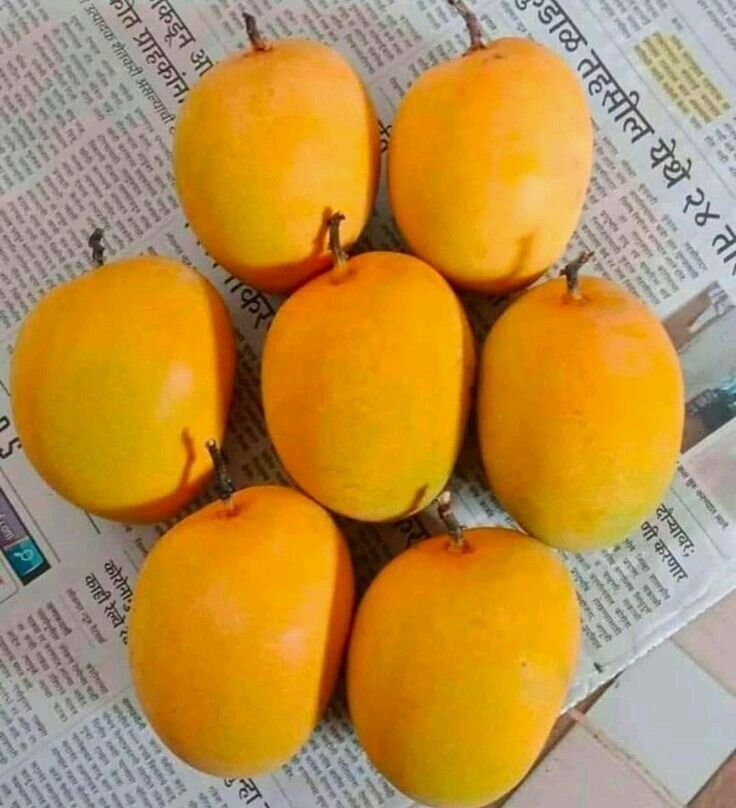
The Alphonso GI tag is the most quoted and least understood thing in the Indian mango trade. It says where a mango grew — not how good it is, how it was picked, or how it will taste in your kitchen.
Every April we get the same phone call. A customer has bought a box marked "GI certified Alphonso" and found fruit that is rock hard, spongy at the shoulders, or flatly sweet in a way nobody on our coast would call Hapus. How can a GI mango be a bad mango? The two things are only loosely connected, and knowing why makes you harder to cheat.
What a Geographical Indication is under Indian law
A Geographical Indication is a form of intellectual property. In India it operates under the Geographical Indications of Goods (Registration and Protection) Act, 1999, administered by the Geographical Indications Registry — an office under the Controller General of Patents, Designs and Trade Marks, within the Department for Promotion of Industry and Internal Trade. The Registry sits in Chennai.
The logic is simple. Some goods take their character from where they come from: soil, climate, and know-how built over generations. Darjeeling tea, Kolhapuri chappals and Nagpur oranges are the same family. Once registered, the name becomes a collective right of that region's producers rather than a brand owned by one company, and the registration runs for a defined term that must be renewed.
Two things follow. A GI is a right to a name, and it is collective: nobody "wins" the Alphonso GI. Producers of a defined area jointly protect it so fruit grown outside cannot lawfully be sold as the real thing.
Which part of the Konkan the GI covers
Alphonso grown along the Konkan coast of Maharashtra holds GI protection. The designated area is the coastal belt, covering growing areas in Ratnagiri, Sindhudurg, Raigad, Palghar and the Thane region. Talukas within it carry very different reputations, and that is where confusion starts.
Ratnagiri — the district and its coastal talukas — commands the highest prices and the loudest marketing, alongside the neighbouring Sindhudurg coast. Rajapur, Lanja, Pawas, Malvan, Vengurla and Dapoli grow serious Alphonso too. Raigad, Palghar and Thane orchards further north sit inside the GI area but ripen on a different schedule.
Being inside the GI area and being a Ratnagiri mango are different claims. Fruit from Alibaug is legitimately Konkan Alphonso, but it is not Ratnagiri Alphonso. Sellers routinely blur this; we have written separately on how to spot real Ratnagiri Alphonso by shape, skin and stem.
Why terroir is the entire argument
The GI exists because the same grafted Alphonso tree, planted outside this belt, does not give the same fruit. That is not folklore; it is the reason protection was granted at all.
Laterite soil
Most of our orchards sit on jambha — the red laterite rock and thin soil of the Konkan plateau. It is iron-rich, sharply drained and, frankly, poor by farming standards. A tree here has to work: roots push into rock fissures, vegetative vigour stays low, and the fruit comes out smaller, denser and more concentrated than on rich alluvial land, where the tree grows fat and the fruit watery.
Sea, humidity and the temperature swing
Our orchards are a short drive from the Arabian Sea, many in sight of it. Sea breeze moderates afternoon heat, coastal humidity keeps the skin supple, and the sharp day-to-night swing through February and March drives sugar and aroma. Plant that graft inland and you get a bigger, prettier, often perfectly sweet mango missing the saffron flesh, the low fibre and the perfume. We compared the varieties in Alphonso vs Kesar vs Payri vs Badami.
Who is actually authorised to use the tag
This is the part almost nobody gets right. The Act recognises two categories.
- Registered proprietors. The applicant bodies — Konkan grower associations and cooperative societies — holding the registration for the region's farmers. Custodians of the name, not commercial owners of it.
- Authorised users. Individual producers inside the area may apply separately to be entered on the register. That grower-made application is what legally entitles a farmer to use the GI on their fruit.
In practice: being located in Ratnagiri does not make a seller an authorised user. Authorised users have always been far fewer than the people selling "GI Alphonso" online, and many genuine farmers we know never did the paperwork — real Hapus from real soil, simply not on a register. The absence of a GI claim tells you little, and its presence tells you less than you would hope.
What the GI tag does not guarantee
| The GI tag speaks to | The GI tag says nothing about |
|---|---|
| Origin within the notified Konkan belt | Grade — export-grade fruit or blemished seconds |
| Lawful right to use the regional name | Size and count consistency in the box |
| Reputation built on regional conditions | Maturity — fruit cut early for a price |
| Recourse against passing off | Hay ripening versus chemical forcing |
| The district the tree stood in | The taluka, orchard or elevation |
| Producer eligibility to use the name | Cold chain, packing and transit damage |
A GI Alphonso picked ten days early, force-ripened in a shed and packed badly is still a GI Alphonso. It is also a disappointing mango. Origin is a floor, not a ceiling. Nearly everything you taste is decided in the last three weeks — harvest, grading, ripening — which is why we walk readers through what happens inside a Konkan orchard.
How stickers and QR codes get misused
Printing is cheap. A roll of stickers with a GI-style logo, a map of Maharashtra and the word "certified" costs almost nothing, and nothing stops a trader in any mandi from putting them on any crate. A QR code is only as trustworthy as what it resolves to: we have seen codes land on stock-photo pages, on a WhatsApp number, and on nothing because the domain lapsed.
Watch three patterns: "certified" attached to nothing (by whom, under what scheme?); a GI claim printed beside a variety with no Konkan connection; and a GI mark with no grower name, village, packing date or phone number. Genuine traceability is boring and specific. Decorative traceability is glossy and vague.
Ask one plain question: "Which taluka and village is this lot from, and whose orchard?" A farm-direct seller answers instantly and specifically. A repacker changes the subject to certificates.
How a buyer should actually verify origin
- Ask for the village, not the district. "Konkan" and even "Ratnagiri" are wide; a real answer names a village in a taluka, and the harvest and packing dates come without checking.
- Look at the fruit, not the box. Konkan Alphonso runs modest in size, with a curved shoulder, a slight beak at the base, thin skin ripening to warm golden yellow rather than uniform orange, and perfume at the stem end before full ripeness.
- Cut one open on arrival. Saffron flesh, low fibre near the stone and a thin flat stone are the signatures. Pale stringy flesh around a bulky stone is a different fruit whatever the label says.
- Check the ripening story. Naturally ripened fruit comes good unevenly over several days. A box turning identically yellow on one morning is a warning, not a feature.
- Buy against the calendar. Fruit far outside the natural window deserves questions; our season calendar tracks the harvest month by month.
Why the GI still matters for small Konkan farmers
Given these limits it would be easy to dismiss the GI as a sticker. It is not. For a family working four hectares of laterite hillside, it is the only legal instrument stopping the name their grandparents built from being used freely on fruit from anywhere in the country. Without it, "Alphonso" becomes a generic word for any yellow mango, and the premium keeping small Konkan orchards alive collapses into the market rate.
It matters for export too. Overseas buyers want defensible origin claims, and a recognised GI gives Konkan fruit a standing an unregistered name does not have. It also gives the region a reason to organise — keeping records, formalising grading, thinking about reputation collectively rather than one crate at a time.
The GI protects the name. Protecting the fruit is still the farmer's job, every single season.
So hold both ideas at once. Treat the GI as a boundary drawn around a region for reasons rooted in soil and sea, then judge the mango on what the tag never measured: when it was cut, how it was ripened, and who will put their name and village next to it.
Frequently Asked Questions
Does a GI tag mean the mango is high quality?
No. A GI is an origin mark, not a grade. Size, maturity and ripening method are separate matters, and a genuine GI mango can still arrive underripe, force-ripened or damaged.
Which districts fall under the Alphonso GI?
The Alphonso belt of coastal Maharashtra: Ratnagiri, Sindhudurg, Raigad, Palghar and the Thane region. The Ratnagiri coastal talukas are the best-known sub-origin, not the whole of it.
Can any Konkan farmer put the GI mark on their boxes?
Not automatically. Producer bodies hold the registration as proprietors; growers must separately apply to be recorded as authorised users. Many genuine farmers never do, so a missing mark does not mean fake fruit and a printed one proves little.
Are GI stickers and QR codes reliable?
Only as reliable as what stands behind them. Stickers are trivial to print, and a QR code is meaningless if it resolves to a generic page or a dead link. Traceability naming the village, orchard and harvest date is worth more.
Why does the same graft taste different outside the Konkan?
Variety is half the story. Thin laterite soil, coastal humidity, sea breeze and a sharp day-to-night swing shape density, fibre, colour and aroma. On richer soil in a flatter climate the same tree gives larger, milder fruit without the perfume.
Order Konkan Alphonso direct from the orchard
Hand-picked, naturally ripened in hay, and packed the day they leave the tree. Message us on WhatsApp for this season's availability and prices.